
How to Make Friends as an Adult
At some point in adulthood, most people look around and realize their social life has gotten smaller than they intended. Not because anything dramatic happened — no falling out, no big move, no obvious reason. Just the slow drift of everyone getting busy, and the growing suspicion that making new friends at this age is somehow harder than it should be.
It is harder. But it's also more learnable than people think.
What happened is that you graduated. School handed you proximity, repetition, and a captive audience five days a week. Adult life hands you a full inbox and a vague sense that everyone else has already figured this out. They haven't. Almost everyone is in the same situation, waiting for someone else to make the first move.
The good news: making friends as an adult is a learnable skill. It just requires being a little more intentional than you had to be at age twelve.
First, get clear on what you actually want
Before you download a friend-finding app or sign up for seventeen new activities, it helps to know what kind of friendship you're actually looking for. This is the Desire component of the Wholehearted Friendship Framework — and most people skip it entirely.
Ask yourself: are you missing someone to do things with, or someone to confide in? A fun Wednesday night or a 2am phone call? A group or a one-on-one relationship?
The Friendship Axis can help you figure this out. Think of your friendship needs on two dimensions: Doing vs. Feeling, and Active vs. Nostalgic. This gives you four friendship types:
Buddies — people you do things with, actively and in the present. Great for activities, adventures, and getting out of the house.
Confidantes — people you process life with. The ones who know what's actually going on with you.
Back-in-the-day buddies — people you used to do things with. Fun to reminisce with, but not a current presence.
Past confidantes — people you used to be close to emotionally, but have drifted from.
Most people who feel friendless are actually well-stocked with Back-in-the-day buddies and Past confidantes. What they're missing is someone in the top two quadrants — an active Buddy or a present-tense Confidante. Knowing which one you need tells you exactly what kind of connection to pursue.
Understand where new friends actually come from
Here's the structural reality: a friendship needs three conditions to develop. Proximity — a place where you regularly encounter the same person. Repetition — seeing them more than once. And a context that encourages openness — somewhere the conversation can go past the weather and weekend plans.
Adult life doesn't generate these conditions automatically. You have to build them. That means finding one recurring context — a class, a club, a volunteer commitment, a standing social event — where you'll see the same people week after week. Not a one-off networking event. Not a party where you'll never see anyone again. Something with a built-in reason to return.
Then actually follow up
This is where most adult friendship attempts stall. You have a great conversation, you think "I should hang out with that person," and then you never do anything about it because initiating feels awkward and you're not sure they'd even want to and wouldn't it be weird to just text someone you've met twice—
It wouldn't. Send the text.
A direct, low-stakes invitation is all it takes: coffee, a walk, a specific thing you both mentioned liking. The ask doesn't have to be elaborate. It just has to happen. This is the Diligence part of the Wholehearted Friendship Framework, and it's the step that separates people who have friends from people who have almost-friends.
Know which tier you're building toward
Not every new connection needs to become a best friend, and trying to fast-track intimacy is one of the most common ways adult friendships fizzle before they start. The Bathtub Theory maps your social world as a series of water features:
Your Bathtub is your innermost circle — three to five people who really know you.
Your Jacuzzi holds your close friends — people you see regularly and genuinely enjoy.
Your Swimming Pool is for good-time friends: great company, lower stakes.
Your Beach Bonfire friends are the familiar faces you're always happy to see.
Your Water Park is your broadest outer ring — acquaintances and friendly connections.
New friendships almost always start in the Water Park or Beach Bonfire and move inward over time. The goal when you meet someone promising isn't to immediately pull them into your Bathtub — it's to move them one tier closer. That's it. One tier at a time, through repeated contact and genuine investment.
Make it enjoyable — for both of you
The final ingredient is Delight — the part that makes friendship sustainable rather than feeling like a self-improvement project. The goal isn't to accumulate contacts. It's to find people whose company genuinely energizes you, and to let that show.
People move toward people who make them feel good. Delight is what transforms a repeated acquaintance into someone who thinks of you when something funny happens, who saves you a seat, who texts first. It's the ingredient that makes the whole thing feel less like effort and more like what it's supposed to be.
Want to go deeper?
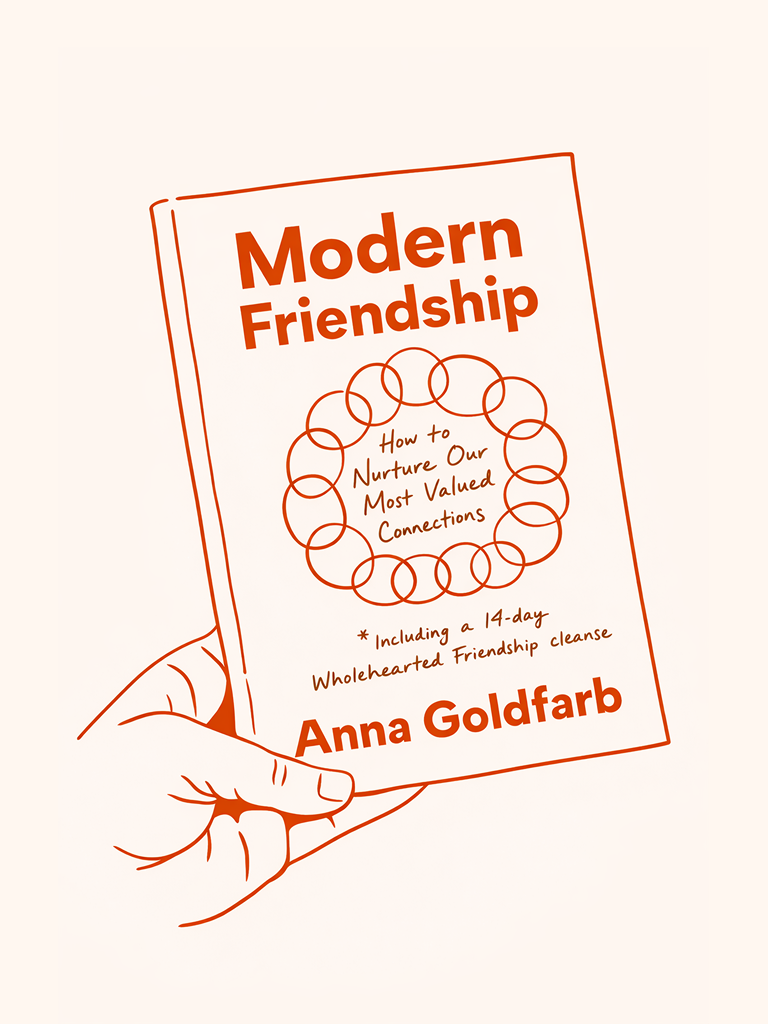
Modern Friendship is the complete guide to building, maintaining, and navigating adult friendships — including the full Bathtub Theory, the Wholehearted Friendship Framework, the Friendship Axis, and everything else you need to actually do this. Pick up a copy here.
For weekly advice on adult connection, subscribe to Friendship Explained on Substack.