
Why Do I Have No Friends?
If you're asking this question, you're not broken. You're probably just navigating a stage of life that nobody warned you about.
Making and keeping friends as an adult is genuinely hard — harder than it was in school, where proximity and repetition did most of the work for you. When those structures disappear, most people don't replace them with anything intentional. Friendships stall. Circles shrink. And at some point you look around and realize the social life you assumed would just exist... doesn't.
Here's what's actually going on, and what you can do about it.
You probably have more connections than you think — just in the wrong tier
Most people who feel friendless aren't starting from zero. They have coworkers, neighbors, acquaintances, old classmates they occasionally like posts from. The problem isn't a total absence of people — it's that none of those connections have been developed into anything closer.
In Modern Friendship, this is explained through the Bathtub Theory. Picture your social world as a series of water features, each one representing a different level of closeness:
Your Bathtub (1-2 people) holds your innermost circle — the people you'd call in a crisis, the ones who know what's actually happening in your life. This group is small by design: three to five people.
Your Jacuzzi (3-5 people) holds your close friends — people you see regularly and feel genuinely comfortable with.
Your Swimming Pool (10-15 people) is for good-time friends: fun to be around, but not people you'd call at 2am.
Beyond that are your Beach Bonfire friends (50 people) — familiar faces you're happy to see — and your Water Park (150 people), the broadest outer ring of acquaintances.
Most adults who feel lonely aren't missing the outer rings. They're missing the Bathtub and Jacuzzi. And those don't fill themselves.
Why adult friendships stall
A friendship needs three things to develop: proximity, repetition, and a context that encourages openness. School provided all three automatically. Adult life provides almost none of them by default. You probably have very little practice running your social life with no training wheels. It’s genuinely hard.
After your mid-twenties, you have to create those conditions deliberately. That means finding contexts where you see the same people repeatedly — a class, a club, a standing commitment — and then doing the thing most adults skip: following up. A single good conversation doesn't build a friendship. Consistent contact over time does.
The most common reasons people end up isolated
A major life transition — a move, a new job, a breakup, becoming a parent — disrupted an existing social infrastructure and nothing replaced it
You've been waiting for friendships to happen organically the way they did when you were younger
You have social anxiety that makes initiating feel disproportionately risky
Your existing connections have stayed at acquaintance level because neither person has pushed past small talk
You've outgrown your old friendships but haven't yet built new ones that fit who you are now
None of these are character flaws. They're structural problems, and structural problems have structural solutions.
What to actually do: The Wholehearted Friendship Framework
Building a closer social life requires three things working together: desire, diligence, and delight.
Desire is knowing what you actually want from your friendships — and being honest about it. Not a vague wish for "more friends," but a clear picture of what kind of connection you're missing. Do you want someone to do things with? Someone to confide in? A group or a one-on-one relationship? Desire gives you direction. Every friendship needs a clear and compelling reason to stay active. That’s desire.
Diligence is the follow-through. Friendship at this stage of life is built through repetition more than chemistry. It means sending the follow-up text, showing up consistently, and not waiting for the other person to do the initiating. Start with one person already in your outer rings — a coworker you like, someone from a class, a neighbor you've talked to a few times — and send a direct, low-stakes invitation. Coffee, a walk, whatever requires the least coordination. One intentional reach-out is how every Bathtub friendship starts.
Delight is what makes the whole thing sustainable. Friendship shouldn't feel like a networking obligation or a self-improvement project. The goal is to find people whose company genuinely energizes you — and to let that enjoyment show. People move closer to people who make them feel good. Delight is what turns a repeated acquaintance into a real friend.
Want to go deeper?
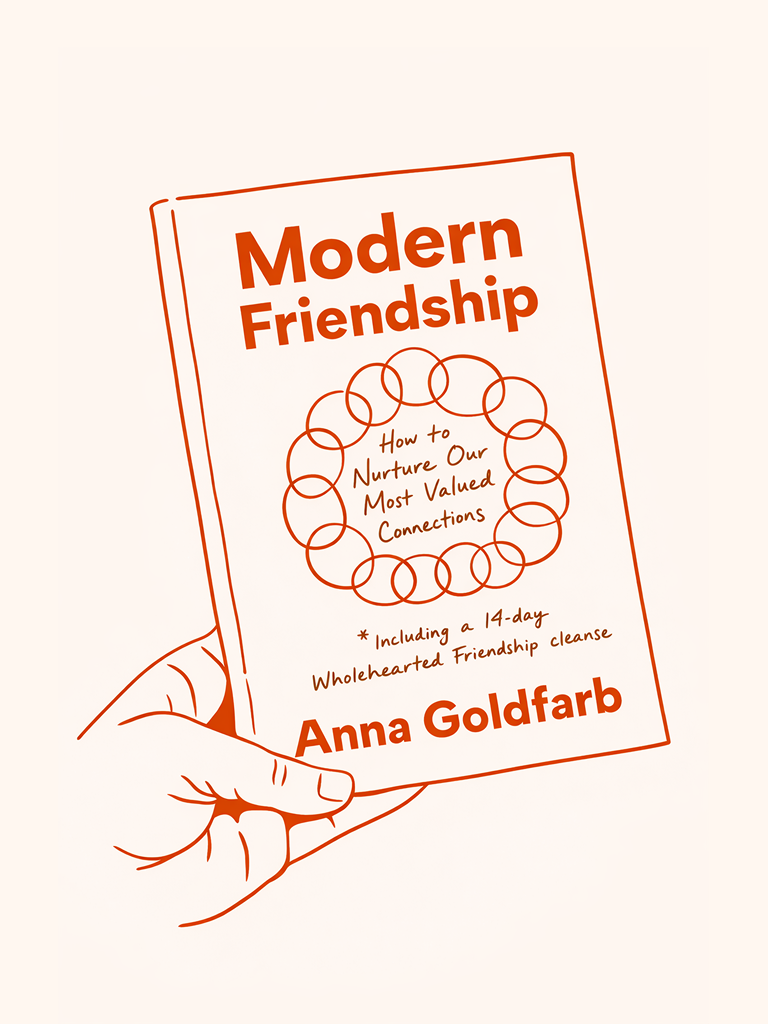
Modern Friendship was written exactly for this moment — the one where you realize adult friendships don't maintain themselves and you're ready to be more intentional about it. It walks you through the Bathtub Theory, the Wholehearted Friendship Framework, and everything else you need to build the social life you actually want. Pick up a copy here.
For weekly advice on navigating adult connection, subscribe to Friendship Explained on Substack.